Saturday, March 30, 2013

Spring in a National Wildlife Refuge

All winter long I look forward to spring break because I know that at least one of those days will be spent in a fantastic natural area looking for birds and enjoying the newly emerging season of spring.  Last year we were down south and went over the mountains to the edge of the Mojave and Butterbredt Springs (you can read about that 
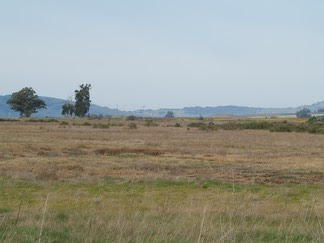
here), this year Pat and I went to check our Sacramento National Wildlife Refuge and then tour our way through some of the foothill country on the west side of the central valley as we made our way back to Napa.  We started the tour route at SNWR just after eight and were almost overrun by Jack Rabbits, along the route we saw many of the expected waterfowl species including a few late Pintails and some small concentrations of Canada and White-fronted Geese.  The Snow Geese had already left the refuge but we were treated to many Ring-necked Pheasants a few of which were fighting for the amusement of a possible mate.  White-faced Ibis and a roosting Great Horned Owl rounded out our more interesting sightings at the refuge.  After stopping briefly for lunch in Willows we headed east on Hwy. 162 and then south on some very small country roads into a beautiful valley called Bear Valley.  I don't know how many different valleys in California share this name but certainly it is a considerable number.  This speaks to what must have been a considerable bear population in the state at one time.  Probably referring to both Brown and Grizzly species as both were present during the days when english place names became fixed to various geographic spots. This long valley has a companion creek and a cattle ranching operation that is no doubt the present day iteration of the outfit that gave the valley its name.  The highlight of our trip through this valley was a mature Golden Eagle that appeared the moment after I took the photo at the top.  He was moving through the trees on the side hill on our left and I turned the camera a got off a few quite images of him flying and figured that that would be the end of the show.  I watched him sail behind a stand of oaks and he did not emerge on the other side so I figured he must have landed in one of the trees.  After pacing back and forth along the road looking for him we gave up and got into the truck to continue on down the road and around the brow of a hill.  As soon as we came around the hill I looked up to the left and there was our eagle and he had just dropped onto a meal!  We could never tell what it was he was tearing apart as it was down in the grass at his feet but he was not in the least concerned about us as we watched him from down on the road.

As we came to the bottom end of the valley we entered a narrow canyon whose passage would take us out to the intersection of Highways 20 and 16. Here we came upon the distressing sight of a cattle operation that was causing major stream degradation of Bear Valley Creek.  All along this stretch the cattle were in the water or on the banks and we spotted at least two carcasses as well.  The land and creek were signed private property along the road and I don't know enough about land use and water laws to know if this was something I could report to a management agency, let alone which agency I should contact.  It was distressing after such a great day out and I will try and follow up on it.  We did see a nice pair of Wood Ducks in a stretch that was not marred by the cattle.

From here we were back on main roads and followed Hwy. 16 down along Cache Creek and into Capay Valley.  We stopped a few times to look at the creek which is surprisingly large for an east flowing stream.  Checking my maps later I suppose I shouldn't be too surprised as it appears to be the outfall of Clear Lake. We eventually arrived back home in Napa at 5 pm. a full day's adventure in hand.


Friday, March 1, 2013

Huichica Creek and More Musings on Shared Sightings

Some rare time off of work gave me the opportunity to wander around at Huichica Creek this morning. I took along my mountain bike as I thought it might give me the chance to venture a little further than I usually do when going out there. The fact is the levees and dikes are quite extensive and if you follow them you can actually travel some distance in your explorations. Having the bike made it possible for me to see it all from a new perspective. I was thinking of my friend Roger who mentioned that he was looking for a place for his cross-country runners to train and I wondered if this held any promise. I sent him the map below, we'll see if he checks it out.


Another reason I went out there was to check on a Great Horned Owl nest I had found previously (yes, they are just fine). I posted that sighting to the Northbay bird list and received some criticism for doing so. There are some birders who feel this information should not be made public as they think it may reduce the chance of a successful nest. While I understand the concern of some, I have been hesitant to accept the idea that members of the birding community can't be trusted with the knowledge of a nesting location. Perhaps I am naive but I think trust and faith in people to do the right thing, to observe from a distance, to respect the bird and its needs is the way forward. There are of course the incidents that everyone calls attention to in which someone does something dumb or selfishly moves in for the perfect picture, but I think that for every one of those there are 10 others where a person connects to the natural world in a spiritual way or perhaps makes a personal commitment to get involved in the conservation of an animal or a place, or maybe best of all, passes the wonder and awe of nature on to a child. Somewhere there must be a happy medium between secrecy and openness between the narrow view and the broad view. In the end, no matter where you fall on the spectrum our wishes and desires remain the same: to preserve these beautiful creatures and the habitats that support them.

Sunday, February 3, 2013

Of Black Rails and Listservs

As a member of the Northern California birding community I participate in several online discussion groups whose purpose is to share sightings and stories with other like-minded birders out there.  On one of these lists I recently read of an unfortunate incident involving a rare visitor to a frequently visited birding site. It seems a Long-eared Owl had attracted a lot of attention and the actions of a few over-zealous photographers then resulted in the death of this bird. A few weeks later a member of the list posted a question about where she might best be able to see a Black Rail, a small and elusive resident of our salt marshes and a bird of special concern due its declining populations. Her question brought up concerns by members of the list about posting this information in view of what had transpired a few weeks earlier with the Long-eared Owl.  After thinking this over for a time I felt that I could add a slightly different perspective and felt compelled to do so.  What follows is my contribution.

Northbay Birders,

I would preface my remarks by saying that I understand the desire to protect a sensitive species like the Black Rail. However I would offer these thoughts for consideration. I don't think that it serves to deliberately withhold sightings of these species for fear of inconsiderate actions by those few individuals who might or might not cause them harm. While we all probably can think of a time or two when we have seen another observer get too close or cross a properly line they shouldn't, these instances are very much the exception to the rule and should not prevent us from sharing sightings and locations where sightings may be more likely.  Rather than fight the actions of the ignorant few with secrecy, I think it far better to confront them with education. In that vein, reporting sightings of species of concern and giving others the opportunity to see them may cause more people to become passionate about protecting the habitat that supports them and the environment upon which we all depend. 

In addition, I see the list serve as far more than just a way for people who care about birds to communicate their sightings and experiences. It is a living, growing, searchable natural history record of a specific area. A combination of citizen-science and history that many years from now may be a valuable tool for those who are looking back to try and understand this time for any number of reasons that we can only guess at. In my opinion, deliberately withholding sightings would distort that record.

Finally, while I am not yet too old to get out there and enjoy the beauty that surrounds us, someday I might be. I certainly know of others who are passionate about birds but for whatever reason can't strap on a pair of hip boots and head out into the marsh at high tide in hopes of a fleeting glimpse of the elusive Black Rail. But I know they probably enjoyed this posting from Gene Hunn on Dec. 13 as much as I did and perhaps they could imagine themselves right there with him:

"Today at 12:45 PM the king tide hit 8.3 feet on the Petaluma River at Ellis Creek. Andy Lacasse, Gary Compari, and I hiked out into the Salicornia in our knee boots and were rewarded for our efforts by 4 VIRGINIA RAILS and 3 BLACK RAILS, one of which froze on the ground in the weeds for a full 15 minutes offering , as some say, "crippling views" at a distance of 15 feet."

I know that some of you will respectfully disagree with me on this one, but I think these are thoughts worth considering.


Friday, December 21, 2012

Reuniting With Old Friends

I have not written in some time but that doesn't mean I haven't been out there noticing things. Over the course of the last six months there have been many interesting birds and places visited. Nothing new to add to any lists but more importantly an opportunity to meet up with old friends. This past summer, on two separate occasions I had a chance to meet up with friends who shared in many of my early birding adventures.

This past spring I received a surprise e-mail from Jeff Manker, my former college roommate and the person responsible for lighting the birding fire for me. It seems that while searching for information and resources for an Ornithology course he was to begin teaching, he came across this blog. After exchanging a few e-mails we were able to arrange a day of birding together in the area around Corralitos.  It was great fun and I'm hoping that it might be possible to meet over the Christmas holidays at one of the Central Valley refuges for another day out.

When I met with Jeff he was preparing to teach what he believes to be the only ornithology course currently be taught in a public high school in California. My hat is off to him and the staff at Gilroy High School who appear to see the value in fighting for and implementing an innovative approach to the teaching of biology and field science techniques in a high school setting. I am anxious to learn more about how this experiment is working out.

Another Barbershop-birding Rendezvous

After so many years without a get-together we finally managed to make one happen! Paul and Irene had just purchased a vintage trailer that they had to haul from Portland back to Tucson, Michael had a few days off, and I was on summer vacation.  Since Humboldt County is on the way home from Portland, Michael already lives there, and I rarely miss a chance to go there when I can, it was the perfect location (not to mention that it always has great birds and is where we all originally met each other). So for a few days in June there was laughter and merriment amidst the cries of birds on the shores of Humboldt Bay.  Patrick was my road companion on this trip and we went north to Redding first and then west to pick up Paul in Willow Creek.  The Trinity River canyon and drive along highway 299 all the way to the coast remains one of the most scenic drives you can experience.  We stopped along the river several times before we got to Willow Creek just to take it all in. When we arrived in Willow Creek we had a chance to spend some time with Irene and Katherine and what fun it was after so long. Paul then piled in the truck and we headed for the coast and a meeting with Michael. After dinner on the square in Arcata it was out to the Marsh Project for some field work. The Marsh Project was relatively new when we were all undergrads and has changed significantly since that time. Lots more vegetation and more marsh as well. It is a world-class spot for birds and remains the standard in innovative nature-based wastewater treatment technology. We stayed at Michael's in Eureka that night and wore out the vocal chords trying to remember some of the old songs. The next morning it was up to Trinidad Head to see what the ocean might bring us, perhaps the best show was put on by at least two and possibly three Peregrine Falcons. After hiking around the head we headed inland for the Mad River Fish Hatchery and the woodlands that surround it. Lots of good birds in here including a Yellow-breasted Chat that we heard but did not see. From here it was back to the Marsh for a few more hours then Michael had to leave us to go to work and we headed south for Humboldt Redwoods State Park to camp and explore. The highlight here for me was taking Paul to the Rockefeller Grove which contains the largest trees in the park and is a spot Paul had not been to before. Imagine that, a distinguished HSU forestry grad and now Professor at the University of Arizona and he somehow missed the biggest Humboldt County has to offer. Our best bird here was a singing Western Tanager along Bull Creek Road.  After this walk amongst the giants we climbed back into the truck and headed south to Ukiah where Paul was to meet up and stay with an old college roommate before catching the shuttle to SFO and the flight home. After our farewells and promises to do it again next year Patrick and I took our leave and rolled just a few more hours south and home to Napa.

Sunday, May 27, 2012

Least Terns at Huichica Creek


Late spring has brought some interesting visitors to Huichica Creek, our local marsh area that sits on the northern edge of the Napa-Sonoma Marsh complex (click on the image to see it full size). A former teaching colleague of mine who is now retired is a very good wildlife photographer (you can see her work by clicking on this link) and occasionally posts some of her sightings and photos to the Northbay Birds list serve. She recently posted a sighting of a Yellow-headed Blackbird at Huichica Creek and another birder who was looking for that bird found a group of Least Terns there. This was too good to pass up so over the last few days I've made a few trips out there to look for these treats.  On my first trip I had a really good look at a Virginia Rail that was working the edge of some cattails in a slough and but thought I had missed the Least Terns. While walking out on the levee I met another birder who's posts I also see, his name is Bob Battagin and we had a nice chat, he had seen the Terns earlier that morning. While we were talking we heard some very Tern-like calls and a pair of these very beautiful Least Terns flew in and landed on a mud island allowing us to get some really great looks at them.  I checked my records and I only have two other sightings of these birds so this was really nice.

I went back out again the next day while Patrick was at his swim practice and who do I see but Christine Hansen my ex-colleague who is shooting pictures of Marsh Wrens. As we were talking I noticed a lone Phalarope in the pond opposite us and it proved to be a Red-necked Phalarope. A pretty good two days and three new county birds to add to that list.


Friday, March 30, 2012

A Kern County Adventure


Many years ago now, as Michael and I were on our way to Arizona in early spring for a rendezvous with Paul, we visited a place on the northern edge of the Mojave desert called Butterbredt Spring. Often referred to as a "migrant trap" it sits in the mountains that make up the northern boarder of the Mojave Desert in the transition between the dry arid regions to the south and the Sierra to the north. (See the map below.) On that first visit our timing was excellent as I added several new species to my life list. The highlight was a tree full of Short-eared Owls who were either over-wintering birds or migrants on the move. Each time I have come back to Butterbredt I have looked for this species again without success.  This time I brought Patrick along hoping that he might be a good luck charm for the Short-ears.  We left Bakersfield by 6 am and drove over Tehachapi Pass and down into the Mojave.  It is only a few miles north on Hwy. 14 to reach the junction at Jawbone Canyon and then it is on to the dirt roads that eventually would bring us back to Hwy. 178 just east of Lake Isabella. By 7:45 we arrived at Butterbredt Springs, the morning was cloudy and quite cool but we were excited to see what was there. I took it as a good sign that immediately upon entering the trees surrounding the spring I looked up to see a Great Horned Owl roosting up high. We spent the next three hours making our way down the canyon below the spring and back and saw a variety of the local residents including California Quail, Chukar, Roadrunner, Sharp-shinned Hawk and Bewick's Wren but we seemed to be too early for any migrants except for an Orange-crowned Warbler. 
While we were a little disappointed with our species count including a fruitless search for the Long-eared Owls, it was awesome to be back in the desert again. While I don't think I could ever live in this environment I have always relished my time adventuring in it. Pat and I had a fabulous walk up and down the canyon and could only imagine how much more alive it will be in a short week or two.  When we returned to the spring we took some time out for lunch and while eating spotted a Loggerhead Shrike on top of a nearby Joshua Tree.  The last time I was at Butterbredt having lunch two Golden Eagles soared over us but no such luck this time. From here we continued our journey over the mountains to visit the Audubon Society's Kern River Preserve. This riparian forest is said to be one of the largest remaining in California and is well worth a visit. Again we seemed to be too late for the winter residents but too early for the spring and summer ones. We did see a Red-shouldered Hawk score his lunch, a nice Yellowthroat, plenty of bright Western Bluebirds and had another enjoyable walk on their nature trail. This is a place that we will return to again later in the year to see what we might find. After touring this great spot it was time to call it a day and find a good old fashioned frosty cone to complete the adventure. Alas, just like the Long-eared Owls that search was also a fruitless one. If you would like to see pictures of our adventure you can find them under the 'photo collections' menu or you can click here.

Sunday, February 19, 2012

PRBO Science

Perched on a bluff at the edge of the continent, almost a stone's throw from the sea, sits the Point Reyes Bird Observatory's Palomarin field station. For over 40 years scientists have captured and banded birds here making this the oldest continuously operating banding station in western North America. This active research station also plays host to visitors interested in learning about the work they do. On a slightly cool and hazy day Patrick and I made the drive from Napa to visit this venerable institution. We could not have picked a better time to visit. When we arrived we were greeted by Francesca an intern at PRBO and she showed us some of the equipment they use to do their work. PRBO offers these open times to the public on Saturday, Sunday and Wednesday mornings and we were lucky to be the only public there for the period of our stay. Patrick had a lot of good questions and she fielded them all. As we talked her radio crackled and her partner Dan Lipp let her know he was bringing in a bird. Soon Dan came in with a Western Scrub Jay and we watched as they went through the processing of the bird. This involves lots of measuring and weighing to try and determine sex and age and since this bird had been caught before an older band that had become too tight had to be replaced as well. We had a truly delightful time with Dan and Francesca. They allowed us to accompany them as they visited all the nets and to watch closely as they banded and measured the birds that were caught. The highlight of the day had to be when Patrick was able to hold two different Allen's Hummingbirds in the palm of his hand as they were being released. If you would like to visit the Palomarin Field Station or even join PRBO as we have, you can get more information by clicking on the link to the right. 

Tuesday, February 7, 2012

A Funny Thing Happened on the Way Home from Birding

Taking advantage of a beautiful winter afternoon I dragged Patrick out of the house with me and we headed for the Huichica Creek marsh at the Napa River Marshlands. The sun was out and the wind was up a bit but it was really good to be out of the house and getting our feet muddy. There is a developed pond area near the parking lot that is heavily choked with cattails but has some open areas as well. We walked along the edge of this hoping to see the American Bittern that I had seen there previously. We continued out into the open fields beyond seeing where it would take us and eventually found ourselves cut-off by the marsh. Pat spotted a Short-eared Owl on the ground just before he took off and we saw several others. At one point we investigated a bush that had clearly been used by these owls for roosting finding guano, feathers, and even some owl pellets. We walked around the entire developed pond on the way back in and found some really good exposed parts where some patience will probably bring Soras and Virginia Rails into view.  For this day we heard them calling in there but did not actually see any. When we left to make our way back home we went west on Las Amigas to Duhig and along Duhig we were astounded to find a Ferruginous Hawk. To my recollection I have only seen this bird one other time and it was in Mike Morris's backyard in Blue Lake, CA many years ago. To my regret I did not have a camera with me but both Pat and I had good looks and a chance to comment on the various field marks and convince ourselves.  I posted this sighting on the Northbay birdlist and was quickly questioned about it's veracity. Being somewhat miffed about that I went back at about the same time the next day in hopes of finding it again and getting a few photos. Don't think I was wrong.