Monday, September 5, 2022

In Search of the Himalayan Snowcock

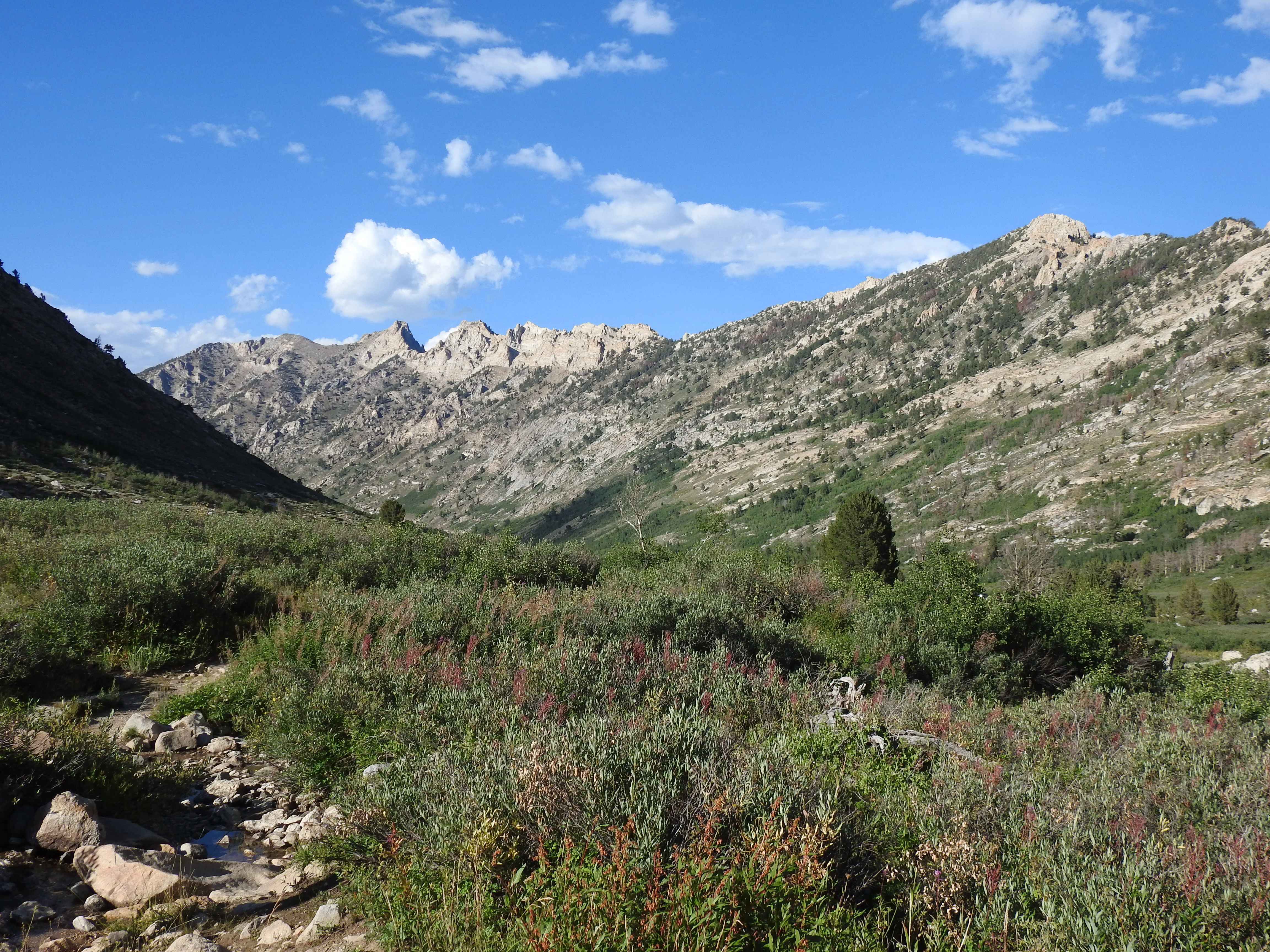
The Ruby Mountains
It was hot. We had stopped for what we refer to as a’ Birding Lunch’ (sandwiches from the fixin’s in the ice chest) at an I-80 rest stop near Lovelock, Nevada. There was not a tree in sight and the only shade came from the metal awning built over the picnic table.  We were clearly in the desert as evidenced by the heat, the salt plain, the dry winds, and the lack of shade. This part of Nevada is right in the middle of the 40-mile waterless stretch that the emigrants on the California Trail had to cross in their heroic journey to a better life. Gazing around as we ate lunch, it is easy to see that we were in the middle of what is known as the Basin and Range Province, an area that includes much of the west from eastern California to western Utah. In the middle of this province sits the most mountainous state in the U. S. and in the middle of that our lunch spot. Most travelers in Nevada barely give this fact a second thought but it is true, there are over 120 named mountain ranges in the state and from where we sat we could see two of them, one on either side. I first became aware of the unique nature of this region from the book, Basin and Range by John McPhee. I say this because I discount a family vacation to Idaho in the early 70s which took us across the I-80 corridor. Back then these were just mountains and deserts that apparently couldn’t be fished. McPhee’s book, like all of his others, is a masterful work that makes it relatively easy for a layman like me to understand the basic principles of the topography and geology of the province.  In short, over the last 30 million years ongoing tension due to uplift is pulling the continental plate in an east-west direction which has led to the formation of parallel faults which are oriented north-south. As the plate stretches, fractures and thins, faulting causes mountains to rise and valleys to fall - the basins and the ranges. Jeff and I had come to the province on a mission, for in one of the highest and most scenic of the ranges, the Ruby Mountains, there lives a bird that can only be seen in North America within the confines of the higher slopes of the range - the Himalayan Snowcock. These birds were introduced into the Ruby’s in the early 1960s to provide sport for the region’s hunters and hopefully to draw some tourism dollars to the area. Snowcocks stay almost entirely above treeline and as a result few of them are actually hunted each year. Nevada Fish and Game officials in the 1960s probably had no inkling that the impact on the local economy from the introduction of these birds would not come from hunters but from birders traveling from all over to add them to their life lists. We were two such birders and, to our good fortune, we were joined by a third, Michael Morris who was traveling from his home in Eureka to Wyoming for a well-earned vacation from his life of retirement on the North Coast. Jeff and I left Napa early on the morning of August 17th and we took advantage of our crossing of the Sierra to go after his nemesis - the Mountain Quail. In the area of Yuba Gap (where I spent 2 summers at Boy Scout camp) is a road into a PG&E reservoir called Lake Valley Road. There had been recent reports of the quail so we took some time to check it out. This area appears to have been burned over a number of years ago and it proved to be a great birding spot. Highlights here included Williamson’s Sapsucker, Western Tanager, Townsend’s Solitaire, White-headed Woodpecker, and yes MOUNTAIN QUAIL!
Leaving the mountains of California behind we arrived in Lamoille Canyon in the Ruby Mountains which is just to the east of Elko.
Upper Lamoille Canyon
I really can’t say enough about the beauty of this canyon. Approaching on the highway it is visible as a slash or a crack in the range, very narrow and not too hard to miss. As you enter and move up the canyon it alternates between very narrow, steep (vertical) sides and more open sections covered in aspens. At road’s end you find trailheads up to Lamoille Lake and Island Lake, both about 2 miles long and in excellent condition. The following morning we would make the hike to Island Lake in our quest for the Himalayan Snowcocks. We found Michael at his campsite and continued birding our way up the canyon picking up Western Wood Pewee, Lewis’s Woodpecker, Mountain Bluebirds and a really nice pair of Golden Eagles to name a few. We then headed back down to Lamoille for dinner and to iron out our plan of attack for the morning. The alarm rang at 3 am the next morning and we crossed our fingers and hoped for good luck. Starting up the trail at 4:15, we really didn’t need our headlamps as the moon provided plenty of light. Most people who are lucky enough to spot the Snowcocks do so shortly after dawn as they move from the ridge tops down to feed. We were in position above Island Lake in time to enjoy a beautiful sunrise.
Ridgeline Above Island Lake
We scanned and we scanned, surprised to see a Mountain Goat and then shortly after 6 am we heard a few Snowcock calls. Unfortunately, that was going to be the best we could do. We stuck to it but after several hours neither of us had a glimpse of these birds. As we retreated we did pick up some nice birds including Lazuli Bunting, Yellow and MacGillivray’s Warblers, Mountain Chickadees, and a Rufous Hummingbird. The rest of the day would take us a few miles to the west and South Fork Reservoir. It was quite hot with occasional cloud cover relieving us. Here we added waterfowl species as well as Sandhill Cranes and a nice Cooper’s Hawk. As we left the area and headed back towards Lamoille it was quite clear that we were going to get some weather.  Driving across Nevada the last thing you think about is rain, however, it is a little known fact that the Ruby Mountains receive nearly 50” of precipitation in an average year. We were about to get a taste of one form this can take - the thunderstorm. Late afternoon in Lamoille was a show of thunder, lighting, and copious amounts of falling water, what a show!

The next morning we were up early again in hopes of getting a glimpse of the Snowcocks. We employed a different strategy this time, setting up our scopes in the valley below the large rock wall where we had heard them the morning before. But alas, not a whiff. Oh well, that just means we are going to have to come back to the Rubys to try again, not a displeasing notion.
Scanning the Cliffs
Ever since we arrived in the region and the locals discovered that we were birders we were asked if we had gone to “the marshes.” Even the Nevada highway patrolman who pulled me over to remind me of the speed limit asked me this question. We had no idea what they were talking about. It turns out that they were referring to what I can only describe as a crown jewel in the National Wildlife Refuge system - Ruby Lake. I had never even heard of this refuge and it is no surprise as it is known as perhaps the most remote refuge in the lower 48 states. Tucked along the east side of the Ruby Mountains and fed by springs and runoff, this place took our breath away. Miles of wetlands in the middle of the Basin and Range province, its beauty was sublime.
Pronghorn Antelope Grazing in the Refuge
Our list of birds in the refuge was not overly impressive but a return at the right time of year could be epic. Our best stop of the day came on the way over the mountains to the east side in the canyon a couple of miles up from the valley floor. Here we ran into a mixed flock that included Blue-gray Gnatcatcher, Vesper Sparrow, Bullock’s Oriole, Western Tanager, Woodhouse’s Scrub Jay, Green-tailed Towhee, and Dusky Flycatcher to name a few.
The Birder's Lunch
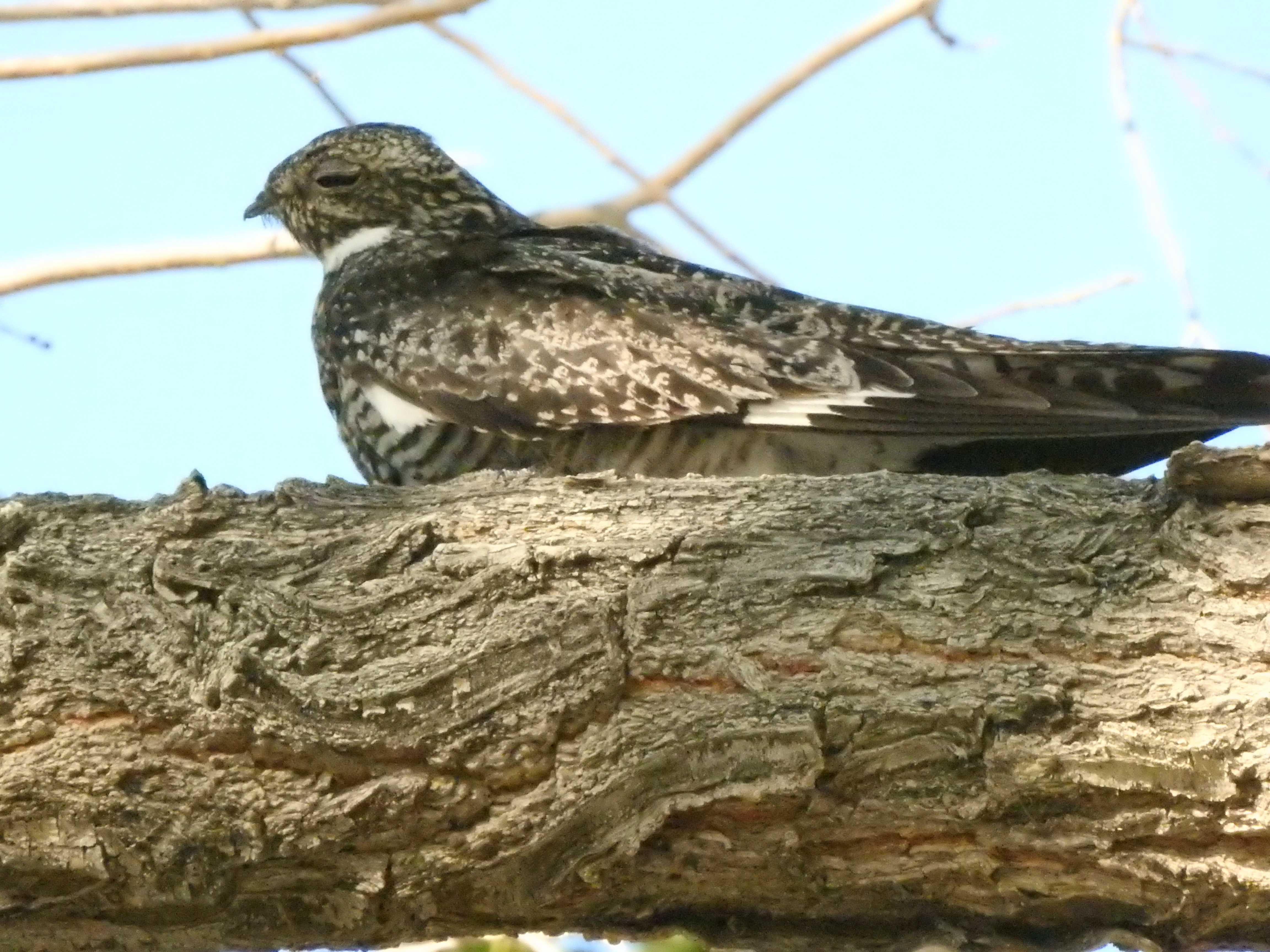
Enjoying another Birder’s Lunch at the refuge headquarters we noticed a plaque by the side of the road commemorating a campsite used by the ill-fated Donner Party in 1846. It suddenly struck me, we were on the Hastings cutoff, the unreconnoitered but heavily promoted alternate route to California that cost many of that party their lives. Gazing at this landscape you could not help but to admire the courage and fortitude of the people who came overland to California in that great westward migration. We would return to the west side of the range by way of a pass called “Secret Pass” where a Badger bid us adieu as it darted across the road in front of us. Arriving back in Lamoille it was time to part ways with Michael, he would be off to Wyoming and Jeff and I would start our trip back to California. As Jeff and I traveled the interstate we had one more surprise in store for us. At a rest stop in Valmy we found a tree full of sleeping Common Nighthawks. I don’t think I have ever seen them at rest before, fitting it was at a rest stop.
Common Nighthawk
Even though we did not get our target bird we had a great time in an area of stunning beauty. I am sure we will be back next spring. To finish off our trip we stopped at a disc golf course outside of Truckee to decide who would own the bragging rights. I humbly bestowed them upon Jeff, I will get my revenge next time!


Thursday, August 11, 2022

Spring in the Mojave - April 2022

*I finally got this write-up done!

Every year come spring, there awakens in me the very strong desire to go adventuring in the desert. For me that almost always has meant the Mojave Desert in Southern California. Maybe it is the desire to find some warmth after the winter season, the excitement of a road trip with friends, or perhaps the certain knowledge that migration is beginning and there will be good and sometimes great birds to be seen. Bottle this all together and you create the circumstances that have taken me to the northern edge of the Mojave year after year to begin a springtime journey at Butterbredt Springs.
There is a certain magic about Butterbredt which I can trace back to my first visit there in the early 1990s with Michael Morris. We were on our way to Arizona for a spring trip and Michael had heard about the spring from his local birding community and was told that it was a must-visit spot for any serious birder traveling through this region. We arrived there in the afternoon, not the ideal time of day, but our stroll through the spring and then down the wash was exceptional and was highlighted by a tree full of about 10 Long Eared Owls. That kind of sighting will lend any place a certain magical aura that will stick with you for the rest of your days. Every time I drive the road into Butterbredt there is that anticipation and excitement that is driven by the question, “What are we going to see this time?”

Butterbredt Spring

Once again this year we were a little early for spring migration as the date of my trip was determined not by when the best time to go would be, but by my school district’s determination of when spring break would occur. The good news is that this would be the last time that would happen as this was my last year teaching before retirement. In planning for this trip I plotted out a circular route we could follow that began at Butterbredt and took in two other places I had longed to visit, Big Morongo Canyon Preserve and the Mid Hills Campground region of the Mojave National Preserve. Joining me as he so often has these last few years was Jeff Manker who took time out from planning for his upcoming wedding to get in one last pre-marriage birding trip. Jeff has now moved up to Alameda so that is where we would begin our trip list.
We began with his local patch that includes the shoreline of San Francisco Bay. This is a strategy that is sure to pad any desert trip list. Our highlight here was the large number of Elegant Terns that were roosting on the jetty across the inlet. After this we headed for Bakersfield, picking up roadside sightings of Wild Turkey and Cattle Egret on the way. When traveling this route a stop at Kern National Wildlife Refuge is always a good idea so we made it our lunch stop. We drove the auto tour route and picked up most of our waterfowl species for the trip. I have to say that the NWR system is one of the hidden gems of the American public lands collection. The system is under stress in California due to drought and climate change but it remains critical to the health and survival of many important resident and migratory bird species. One way birders can support this system is to purchase a Duck Stamp each year. Possession of the stamp covers entry into any National Wildlife Refuge that requires a fee and supports the valuable conservation work the Fish and Wildlife service does. You can get more information and purchase your stamp here.
Later that afternoon we arrived in Bakersfield, went to Beale Park to check out the Rose Ringed Parakeets, and stayed once again with my gracious mother-in-law. Then it was up early to head to the Mojave and Butterbredt Spring. As previously mentioned we were too early for the peak of spring migration so our list here was a bit sparse. Our highlight here was what we believed to be a Gray Flycatcher. We puzzled over this id but this was our conclusion after reviewing the guides and studying the pictures. From the northern edge of the Mojave we headed due south and made for Big Morongo Canyon Preserve. On the way we stopped and birded the county park at the Mojave Narrows.

Jeff at the Narrows

This was an interesting place with plenty of water and riparian habitat. It also had a lot of wind which made things challenging. For me the highlight here were Vermillion Flycatchers, beautiful birds that I had not seen in some time. We birded, had lunch and then played a few holes of disc golf - Jeff crushed me.
We got to Morongo Valley, had dinner and then drove up into Joshua Tree National Park for a dusk walkabout. This walk showed us again that we were a little early as it failed to turn up anything other than a few regular residents.
The next day began with our visit to the Big Morongo Canyon Preserve. Situated at the southern edge of the Mojave Desert, the canyon is a transition from the Mojave to the Colorado Desert below and represents one of the largest cottonwood and willow riparian habitats in California.
Trail heading south from the Preserve into the Canyon

It is a birder’s delight with trails and boardwalks snaking through the preserve. We had been concerned by the winds but fortunately for us our morning visit came before the wind rose. Highlights included: Plumbeous Vireo, Verdin, Costa’s Hummingbird, White-winged Dove, Nashville Warbler, Bell’s Vireo, Vermillion Flycatcher, and Phainopepla. Next time I visit here I hope to hike the entire canyon from top to bottom. As we ate lunch in the parking lot we considered our options. Our plan had been to head back north to the eastern region of the Mojave however the weather forecast was not favorable predicting high winds and cold temperatures at night. With that in mind we opted for a dash to the south and Anza Borrego State Park. This drive took us south through Palm Springs where we made a stop at an e-bird location for an Abert’s Towhee that we didn’t see; however, this proved to be a very interesting stop. We were on the western side of Palm Springs on the slope above town leading towards the tramway and looking into a fenced-off undeveloped property on the edge of a pretty high-class neighborhood. There were lots of Western Kingbirds, a Hooded Oriole, and a Roadrunner walking across the street but probably the most unusual sighting was the 50+ Great and Snowy Egrets roosting in the desert scrub on the hillside. Very strange.
Heading further south we made for Borrego Springs and a stop for the night. On the way we picked up a nice roadside Prairie Falcon and then took a side trip to Clark Dry Lakebed to see the nesting Bendire’s Thrasher that had been reported there throughout the spring.

Prairie Falcon

That evening after dinner we noticed that there was a lighted ballfield on the edge of town and theorized that there may be Nighthawks working the area. We only had to spend about 5 minutes waiting until one flew over the field.
We were up early the next morning and off to Culp Valley Campground in Anza Borrego State Park to go after Jeff’s nemesis bird. For the uninitiated, a nemesis bird is one that everyone else seems to see with little effort but you, for the life of you, can’t seem to get a look at. We’d missed it at Butterbredt Spring and we missed it again here. The bird? - The Mountain Quail. We have heard them calling multiple times and even once later in this trip in Upper Butterbredt Canyon, but no sightings. We had a few good birds here including California Thrashers, another Roadrunner and a Cactus Wren. From here we went to Palm Canyon, a famous palm oasis near the park visitor center. We were last here in the mid 1980s during our first NAS Bird-a-thon. Fire has passed through the canyon several times since that time and the scares are quite evident. However, the oasis is recovering nicely and we had an excellent morning birding this hotspot. We had Costa’s and Anna’s Hummingbirds, a Cooper’s Hawk, Warbling Vireo, Nashville Warbler, Loggerheaded Shrike, Black-throated Sparrow, Black-throated Gray Warbler, Wilson’s Warbler, and Western Tanager to name a few.

Borrego Palm Canyon

After another parking lot lunch we were on the road for the long drive to Mid Hills Campground in the northeastern corner of the Mojave National Preserve. We did take a brief stop at the Joshua Tree NP visitor center where we picked up a Black Tailed Gnatcatcher. Continuing on we made for Mid Hills where there were a few target birds we were hoping to get, namely Gilded Flicker, LeConte’s Thrasher, and Juniper Titmouse. We had also hoped to get a look at a Common Poorwill. It was a mad dash racing the sun and we got to the area only a little before sunset. We walked around the campground and could not add anything to our list except a Northern Flicker.

Looking west from Mid Hills Campground - Mojave National Preserve

Our final day would take us back to Butterbredt and then over the ridge and north to the Kern River Preserve. The Spring gave us very similar results to our visit a few days earlier, not even the usual Chukars made an appearance for us. In leaving Butterbredt we decided we would take the narrow track to the top of the canyon and over into the Kelso Creek drainage. As we neared the pass we picked up a Ladder-backed Woodpecker and a Prairie Falcon but what was most intriguing, the call of the Mountain Quail just up the slope from the road. We beat the bush in hopes of seeing it but alas no, it will remain Jeff’s nemesis. Coming down from the pass through a forest of Joshua trees we heard a call we had not yet heard on this trip and was not familiar to us. We turned to a tool I have been using more of lately to help us with the ID. This is the Merlin bird ID app from Cornell. What I most use it for is its ability to identify a bird by sound. It came back with a result of Scott’s Oriole so we were out of the truck and scanning. Sure enough, working through the top of a Joshua tree about 100 yards away we found him. While Merlin is not 100% accurate it can be a very helpful tool in the process of identification. Feeling very pleased with ourselves we headed down to the Kern River Preserve on the South Fork of the Kern River just upstream from Lake Isabella. This is the first time in several years I have been able to get into the preserve’s headquarters area. Either flooding or the long covid closure have kept me out. We began of course by having lunch and then talked with a volunteer who was doing some clean-up work. It seems that the pandemic has taken a toll on this great preserve and they were just starting to get back on their feet again. The afternoon winds came up and made birding this fabulous riparian habitat a challenge but we walked some of the trails and visited ‘Migrant Corner’ before beginning our return trip to the Bay Area.Over the course of our 5 days of birding we counted a total of 160 different species. Not a bad effort but I can’t wait until next year when we can do this in mid- May. One month later in the year could make a significant difference in our species list. Finally, I get to decide when to go (as long as it's ok with Danette!)

Saturday, March 12, 2022

In Training For Retirement


Yesterday was a professional development day in our school district, a day when students stay home and teachers come to work to learn more about the art of educating young minds. Since Danette and I are both retiring in June and we both are feeling that we have been professionally developed enough, we chose to practice the skills we will need for retirement instead. So, rather than sit in front of the computer on Zoom, we headed for Bobelaine Audubon Sanctuary in  Sutter County along the banks of the Feather River.
Bobelaine Audubon Sanctuary


In 1975 Bob and Elaine Crandell gave this 430 acre parcel of land to the National Audubon Society to preserve and protect, an incredibly generous gift to the people of California and the nation. The preserve sits on the west bank of the Feather River between the flood levee and the water and is a prime example of the riparian woodlands which once spread along both sides of all of California's central valley rivers. Sadly, today less than 2% of those forests remain. Over 190 species of birds have been sighted in the preserve including such rarities as the Yellow-billed Cuckoo.

It was a fine spring morning with lots of sunshine and little wind. We enjoyed a complete loop of the preserve stopping to take in views of the river and to spot the usual resident bird species. A return trip in May once all the trees have leafed out would likely result in a lot more birds than we saw yesterday but just being outside on a beautiful day, in a beautiful place was our goal yesterday.

As we made our way back home we both agreed that this day had been a most successful practice day for the many to come after June 16th. You can learn more about Bobelaine Audubon Sanctuary at this link.


Sunday, February 20, 2022

Another Chase With a Good Result

Since first being seen on a Christmas bird count in mid-December, a Brambling has been putting on a show for California birders in the small Northern California mountain town of Quincy. There have been less than 10 records for this species ever in California so this was a chance I did not want to let go by. My buddy Jeff was unable to join me on this chase so when a 3 day weekend rolled around I took my chance. Leaving Napa at 3:45 in the morning I headed towards Sacramento and then north in the Valley to Oroville. The road follows the Feather River from here and takes you along the edge of the gigantic burn from last year's Dixie Fire.  This fire has altered the landscape of a large area where I have both fished and birded since I was a kid. It will recover with time but I will not see it again in the state that I remember with such fondness.

Arriving at the stakeout location a little after 7 am I met another birder, Chris from Pittsburg, who already had several good looks at the Brambling.


Over the course of the next 45 minutes the bird made continuous appearances to collect seed from the ground, staying in the open at least once for 2 minutes. I collected a few low quality images because of the lighting conditions which I share here.

Seeing a migrant species like this so far from where it should be always makes me wonder about the circumstances of its journey. I mean, it is no mystery how it got here, it flew. The mystery lies in why it did not follow its species' traditional migration from northern to southern Eurasia but instead traveled east towards and across the Pacific to North America. We will not ever know the answer to this question but that mystery is one of the attractions to the birding life. The chase to see a bird you have never seen before is the excitement in the story, to wonder about how it got there gives us the mystery.


On my way home I tried unsuccessfully for a Northern Shrike that has been seen near Oroville for much of the winter. I will have to save this one for another chase in the future.

Saturday, February 12, 2022

Mega-Rarity in Palo Alto

Every once-in-a-while a bird shows up a long way away from where it is supposed to be and the birding community goes a little bit crazy. That happened this past week in Palo Alto, CA. when an Oriental Turtle Dove showed up at a neighborhood feeder attracting birders from all over the country.

The Scene

This is only the third California record for this bird and only a handful of other records exist for all of North America. It has been seen most reliably all week long between 7am and 9 am so on Friday when we didn't have school I took my chance, braved the commute traffic and arrived on the scene at about 8:20. What a show! I was told by one of the 100 or so birders that it had not yet been seen that morning so I took up station to wait with everybody else and within 5 minutes, there it was. First perched in a stunted Redwood tree, then flying directly over my head to a telephone wire where it showed off for the crowd for a couple of minutes, finally dropping onto some seed scattered in a yard. A little later it flew off and, to my knowledge, was not seen for the rest of the morning. This was unfortunate as I brought my sister (who lives nearby) back to see it and it did not reappear.


The crush to see the bird on the ground.

You can learn more about the finding of this bird from this article.

Sunday, October 10, 2021

A San Francisco Bay Circumnavigation Big Day

A birding big day is always a fun adventure and this year we focused on an unusual geographic feature for such an endeavor. As Jeff will soon be moving up to the Eastbay he was interested in getting to know more of the good birding spots in the Bay Area and concocted a plan to do a big day that scribed a clockwise circle around the Bay. As usual Michael was game and came down from Eureka to join the fun.
After celebrating Jeff's birthday the night before we started out in Napa before dawn getting our 2 owl species, then it was off to Green Island for shorebirds and ducks.

From here we visited Lake Herman and the Benica waterfront before heading south to the Moraga area and then into the Eastbay Hills. A slight navigation error on my part caused us to miss a section we had planned to do in this area so on we went to Hayward, took a lunch stop and then cut across the Bay to the Palo Alto Baylands for more ducks and shorebirds. From here we crossed over the mountain (seeing an excellent Golden Eagle) and hit the coast at Halfmoon Bay. We picked up the expected coastal birds but the real show was the constantly spouting whales just off-shore. Our next stop was the old battery that sits up on a bluff at the south end of the Golden Gate Bridge where we added a few more species then it was off to try for the rarity that was being seen this week in Marin County. No luck on the Dusky Warbler but we heard a lot of Ridgeway's Rails as the sun went down.
All told we drove 239 miles and saw 104 species. Not a big number but certainly big fun.


Thursday, June 3, 2021

San Benito County - May 29, 2021


You take a birding trip, you have a great time with great friends, you return home and slip back into the regular pace of life, a few weeks go by and you start thinking about another birding trip. So many things in life are cyclical in nature and this particular one is one that I relish. After our great early season trip to the Mojave it wasn’t long before I was wondering, “What’s next?” I contacted my friend Jeff Manker about the possibility of doing something over the Memorial Day weekend and fortunately it worked out. Jeff had recently completed a monumental loop trip that took him to the Gulf Coast, the shores of Lake Erie, and back to California with many stops along the way. He added an amazing 43 species of North American birds to his life list and put over 7,000 miles on his truck, a journey that I wished I could have joined him on but I’m not retired yet. Another reason for getting together was a chance to play on a disc golf course in Aromas, Ca. that he and a friend designed and built. We had fun playing it however, I think the course needs a new name. I’m thinking maybe “Njǫrd” would be appropriate as the norse god of the wind was apparently visiting that day and was in a bad mood.

After playing the course we headed out for an evening of birding in a few local spots around Watsonville. I picked up my first Lazuli Bunting of the year, one of my favorite passerines, as well as a pair of American Bitterns, one of which was engaged in it’s unusual call that seems to require many different body parts to produce.

The next day we were off early for a sojourn into San Benito County. We started with a riparian area along the Pajaro River seeing many of the usual suspects to be found there. Next we headed south along CA 25 heading in the direction of Pinnacles National Park. Just north of the park is a county road that winds it’s way westward up and over the ridge leading back into the Salinas Valley. Traveling roads like La Gloria Rd. are a passion of mine. It immediately goes to dirt after turning off the highway and continues for nearly 20 miles that way crossing through a variety of habitats all of which were good for birds. Some of our highlights for the day were Rufous Crowned Sparrow, Costa’s Hummingbird, Lawrence’s Goldfinch, Lark Sparrow, Western Wood Pewee, and Black-throated Gray  Warbler. Once again a great day out, give me a week or two and I will undoubtably be thinking of the next adventure we can take on the backroads of California.

On our last day we were joined by Claire for a trip down the Big Sur coast. Always hopeful for a Condor soaring above we often looked to the skies. After a great lunch at the Big Sur Cafe and Bakery we hiked along the Big Sur River on a trail that is a part of Andrew Molera State Park. I can’t say enough about the beauty of this little river and this valley it sits in. I am looking forward to returning with Danette for some hiking and further exploring.

Tuesday, June 1, 2021

The Thrasher Tour - Spring 2021

Jeff, Me & Michael w/ Shirlene

My mother-in-law was giving us a quizzical look as we sat around her dinning room table. As always she provided a delicious spread for her guests which, this time included Jeff Manker and Michael Morris who met me and Danette at her home in Bakersfield. I think she was wondering if we were slightly crazy in our obsession with chasing birds across the Mojave Desert and she was probably right. However, this was the kind of crazy I happily plead guilty to. Our plan was to meet up in Bakersfield, pile into one vehicle and head for the desert while Danette and her mom went back to Napa. For many years we have come to Bakersfield during our spring break and I have dragged Patrick with me to Butterbredt Spring for a chance to see some early spring migrants. This year I brought the pros from Dover with me. After a great meal and a gear swap we began our trip with a drive up and over Breckenridge Rd. This has always been a reliable place to see Long Eared Owls and would be our highest elevation on the trip. While the owls were a bust we did get a few high elevation species and a soaring Golden Eagle to whet our appetites. From here we made our way to the top of Butterbredt Canyon where we camped and shivered in the clear night air of the desert. Near morning we heard both Great Horned and Screech Owls calling across the early dawn stirring us into action. We spent much of our morning at the spring but it was still early for migrants.
Scott's Oriole

I am bound by the whim of my school district as to when they decide to give us our spring break and am anxious for retirement when I can make that call. A highlight at the spring was a pair of Scott’s Orioles.
 

     From here we headed north towards the Owens Valley, even more interesting to me as I had just re-read Cadillac Desert, the Marc Reisner masterpiece on the history and politics of western water development. Again, the season was early so we saw mostly the usual suspects but did manage a Black-chinned Hummingbird and a number of Bell’s Sparrows at Red Rocks SP, a few good water birds at Klondike Lake, and visited new area for me, Summit Creek in the area of the Olancha Pass trailhead. We ended our birding day at the 5 Bridges gravel ponds at the northern end of the town of Bishop, adding a number of good water bird species to our list.

     After spending the night in Bishop we headed east over the White Mountains, it was here that we picked up a life bird for both Jeff and Michael, a Woodhouse’s Scrub Jay near top of the climb. Searching around the junction of Hwy. 168 and White Mtn. Road again we found it to be too early for much activity. Continuing on the road took us into Deep Springs Valley, a place I have long wanted to see. We spent a good deal of time scanning the fields near Deep Springs college where saw many Sage Thrashers and desperately tried to turn one of them into a Bendire’s. Also making an appearance for us was a weasel, surely a surprise.

Deep Springs Valley

Continuing on, our goal was Death Valley National Park and to get the authentic experience, we planned our arrival at Furnace Creek for 12 noon, a target, I am happy to say, I hit with perfection. Prior to entering the park Jeff found us a great lunch/birding spot along Hwy. 95 using ebird to locate hot spots. Torrance Ranch turned out to be a really interesting riparian area where, along with sandwiches we picked up a Virginia Rail. Then it was off to Furnace Creek where, like the 3 morons we are, we figured that birding the golf course at 12 noon was a capital idea and sure to net us some good birds. I think our best sighting there was bats flying around hawking bugs in the middle of the day. To be fair we did pick up some birds for the trip list but probably should have skipped it. We decided that our best bet for a campsite was as high as we could get on the west side of the park so we travelled the park roads to get to Wildrose Campground where we were lucky enough to snag the last campsite (there are only 20 or so of them).

Wildrose Canyon

This canyon was a great place to camp and had a good variety of birds including a Roadrunner coming to a seep in the road to drink. We picked up another target bird the next morning by driving up the valley a ways and found an active flock of Pinyon Jays (as Michael predicted we would).
We left Death Valley NP via the Wildrose Rd. going west and got down to the business of locating the one bird that was the theme of this trip - the LeConte’s Thrasher. Just about everything we did until returning to Bakersfield was in pursuit of this devil bird. We used recent sightings in ebird and staked them out in the hopes of seeing this slippery customer but all we ended up doing was to prove the adage that, “you don’t find a LeConte’s Thrasher, they find you.” And on this trip they didn’t make the effort. We passed through Ridgecrest, California City and Mojave without any luck and only a few other species.
We finished up the final day of our trip with a return to Butterbredt Spring hoping for some different birds. We added Chukers and a lone Mountain Quail that Michael found and Jeff could not quite get into his line of sight. This bird could very well be Manker kryptonite as he keeps missing it but comes tantalizingly close every time. From here we followed Kelso Valley out to Hwy 178 and the Kern River Preserve which was still closed due to covid. We were able to bird along some of the edges of the preserve and we did pick up an early migrant, a bird we determined to be a female Prairie Warbler. An uncommon sighting but one that after careful deliberation we were confident in. Down the Kern River we drove to emerge at the bottom end, back at my mother-in-law’s house. Even though our trip list was not substantial (I think we were just short of 100) the camaraderie and the simple fact of being on the road, looking for birds with two of the best people I know was the tonic I needed to see out this school year. I hope Shirlene will have us back again soon. All birding trips should start on a full stomach and she certainly sent us on our way with three of them.


The Crew